










How to Fill Out the DS-160 Form - Step-by-Step Guide and Common Mistakes

DS-160 is the online application for a US nonimmigrant visa. Every applicant files a separate form, including infants, whether they are applying for a tourist visa, a student visa, a work visa or a K-1 fiance visa. The State Department estimates the form takes 90 minutes to complete, and that assumes you already have all the information at hand. Below - what to prepare before you start, how the form's sections work, the photo requirements, what to do with the confirmation page, and what happens if you find a mistake after you submit.
What the DS-160 form is and who needs it
Its full name is the Online Nonimmigrant Visa Application. The form covers the B1/B2 tourist visa, the F and M student visas, the J exchange visa, the H, L, O, P and R work visas, the E-2 investor visa, and the K-1 fiance visa. Immigrant visas and the Green Card lottery use a different form, DS-260.
A few rules that do not bend:
- the form exists only online, on the State Department's CEAC website - there is no PDF version to download and fill out by hand;
- you answer in English, in Latin letters, except for one field where you can enter your name in your native script;
- every applicant fills out their own form, including children of any age;
- for an applicant under 16, a parent or guardian completes and signs the form;
- names go in exactly as they appear in your passport. If your passport shows only a surname, enter FNU in the given name field.
Filling out the form itself is free. The visa fee is paid separately, according to your embassy's instructions - $185 for a tourist, student or exchange visa, $205 for work categories, $315 for E-2, $265 for K-1. Once paid, the fee stays valid for 365 days for scheduling an interview.
What to prepare before you start
In its FAQ on the DS-160, the State Department recommends gathering your documents beforehand, or the form stalls halfway through. You will need:
- your passport, the one you will travel on;
- your travel plan - dates, cities, who is paying;
- the dates of your last five trips to the US and the countries you visited over the last 5 years;
- phone numbers and email addresses you have used over the last 5 years;
- a list of your social media accounts from the last 5 years;
- details of your current job or studies and your last two employers;
- details of your parents, spouse and any previous marriages;
- your US contact - a person or organization you are visiting;
- for students and exchange visitors - Form I-20 or DS-2019 with your SEVIS number;
- for work visas - the I-129 petition number from your USCIS notice;
- a digital photo that meets the State Department's requirements.
Filling out the DS-160 for a US visa? We will check your form before you submit
Leave a request and we will contact you shortly
Getting started - post, Application ID and the security question
The form opens by asking where you will interview. Pick the embassy or consulate you will actually attend - that is the one printed on your confirmation page later.
Next, the system asks you to choose a security question and answer it. Once you do, it issues an Application ID, a number shown in the top right corner of the screen. Write it down right away. Without this ID and the answer to your security question, you cannot reopen an unfinished form or reprint your confirmation page.
An unfinished form is stored for 30 days, then the data is gone. If you are filling it out over several sessions, save it to your computer with the Save Application to File button and come back by uploading that file or entering your Application ID. The page also times out after about 20 minutes of inactivity, according to visa appointment sites - save often.
If you already have an older DS-160, you can use it as the starting point for a new one - the system offers this option when you create a new application.
DS-160 sections and where people get it wrong
| Section | What it asks | Common mistake |
|---|---|---|
| Personal Information | Full name as in your passport, previous names, date and place of birth, nationality, marital status | Forgetting a maiden name or an earlier spelling |
| Travel Information | Purpose of the trip, visa category, dates, who is paying | The stated purpose does not match what you say at the interview |
| Previous U.S. Travel | Your last five trips, prior visas, refusals, violations, deportations | An old visa refusal left out |
| Address and Phone | Addresses, phone numbers and email for the last 5 years, social media accounts | Only some numbers and accounts are listed |
| Passport | Passport details, lost or stolen passports | A lost passport not disclosed |
| U.S. Contact | A person or organization in the US, their address and phone | Answering "no one" when there is actually a host |
| Family | Parents, spouse, previous marriages, relatives in the US | Relatives living in the US left out |
| Work / Education / Training | Current job or studies and your last two employers, languages, countries, military service | Trying to list an entire work history |
| Security and Background | Health, criminal record, security, immigration violations | Answering "no" when there was an arrest or overstay |
| Visa-category pages | SEVIS ID for F, M and J, the I-129 petition number for work visas, the E Visa section for E-2 | Using a number from the wrong notice |
| Photo, Review, Sign and Submit | Uploading your photo, reviewing your answers, signing | Signing without rereading |
CEAC's screen names can differ slightly from this list, but the set of questions stays the same.
A note on social media. Most applicants list their usernames on the platforms above for the last 5 years. If you have no accounts, answer None - that is not a reason for refusal, and consular officers do not ask for passwords. Since 2025, some categories also have to set their profiles to public while the case is under review - this covers F and M students, J exchange visitors, H workers, and K-1, K-2 and K-3 applicants, among a few other categories, and the list keeps expanding further from October 1, 2026. The B1/B2 tourist visa is not on that list.
DS-160 photo - requirements and what to do if the upload fails
The photo has to be in color, on a white or light background, taken within the last 6 months, without glasses or a head covering unless it is worn for religious reasons. Your head should take up 50% to 69% of the frame's height.
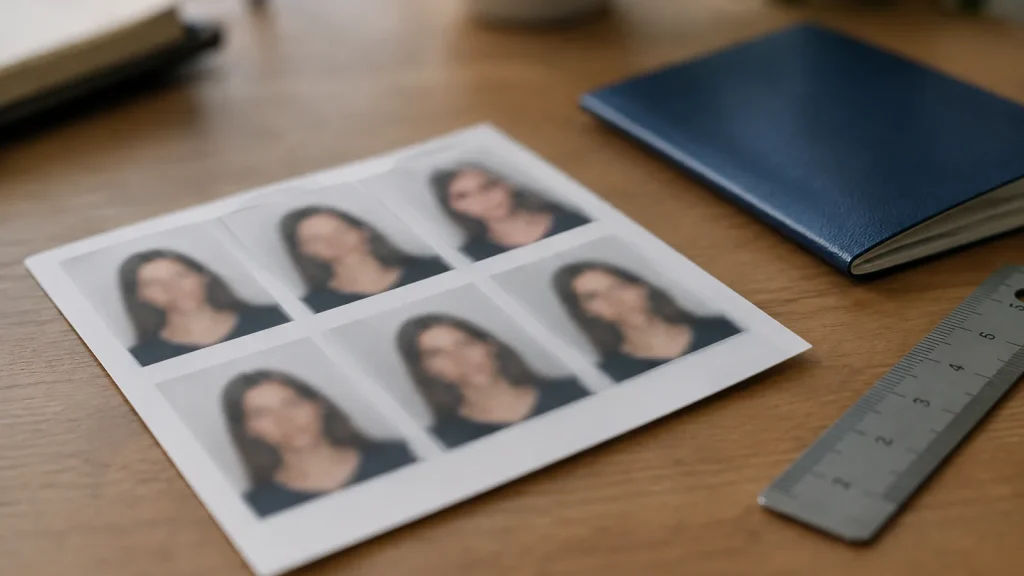
The file itself needs to be a JPEG, a square between 600x600 and 1200x1200 pixels, no larger than 240 KB. If the upload fails, your confirmation page will show an X mark, and you will need to bring a printed 2x2 inch photo to your interview instead.
Submitting the form and the confirmation page
Before you sign, the system shows every answer for you to review. Corrections have to be made with the buttons at the bottom of that same page - anything else will not save. If someone helped you fill out the form, you note that at the end.
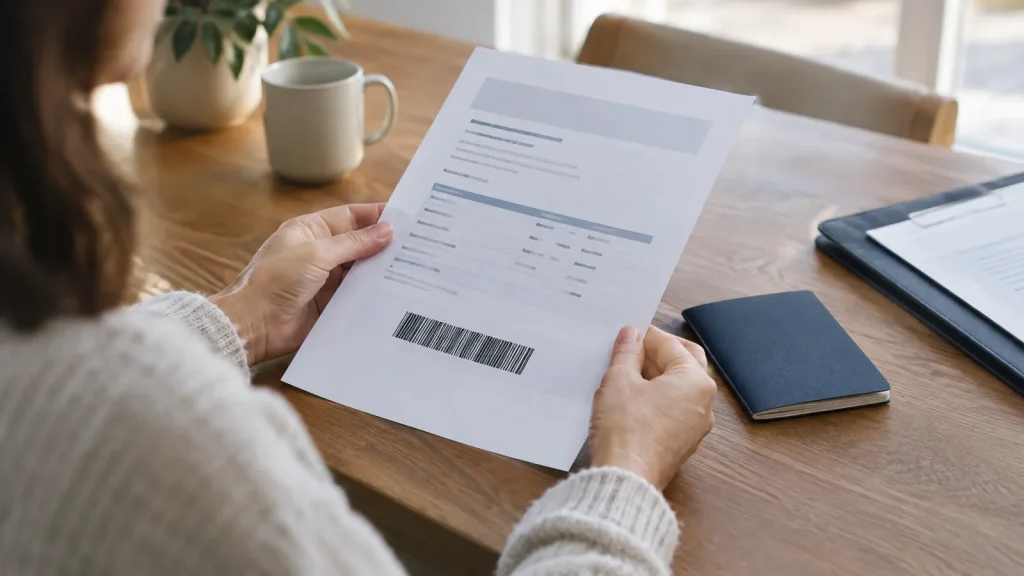
Once you sign, you get a confirmation page with a barcode, a number starting with AA00. Print it and bring it to your interview - you do not need to bring the form itself. You can also email yourself a copy of the confirmation page, or reprint it later by logging into CEAC with your Application ID and security answer.
The barcode from your form has to match the one in your interview appointment profile. If you fill out a new DS-160 after already booking an appointment, you need to update that barcode number in your appointment profile too - how you do it depends on the scheduling system your post uses, so check your embassy's instructions before you resubmit.
Found a mistake after submitting your DS-160? We will help you figure out what to do next
Leave a request and we will contact you shortly
Fees, scheduling and where to apply
The visa fee is paid separately from the form, according to your embassy's instructions, and it is not refunded if your visa is denied. You schedule your interview in your country of citizenship or residence - the State Department has worked this way since July 15, 2026. Your interview takes place at the US embassy or consulate that serves that location. Deadlines for submitting the DS-160 before your interview, and any local rules about interview languages or interpreters, vary by post - check the instructions published by your embassy.
Since October 1, 2025, an in-person interview is required for almost everyone, including children under 14 and applicants over 79. The most common exception is renewing a B1/B2 tourist visa within 12 months of the old one expiring, for applicants 18 or older. Fingerprints are taken starting at age 14.
For nationals of a few countries, a consular officer can also require a refundable bond for a tourist visa, from $5,000 to $15,000 - the current list is on the State Department's site. Nothing gets paid inside the form itself.
What other visas cost, and which fees an employer covers, is a separate topic - we cover it in another article on US visa fees.
What to do if you find a mistake after submitting
You cannot edit a submitted DS-160 yourself. Only the consulate can reopen it, and that usually happens once a case has gone to additional administrative processing. If the mistake is significant - wrong dates, a missed visa refusal, a misspelled name - you fill out a new form, get a new barcode, and update it in your interview appointment.
A minor inaccuracy does not always need a new form - you can mention it to the consular officer at the interview instead. The decision is up to the officer, so it helps to bring a document that supports the correct information.
There is no official expiration date for a submitted form. The real limits are different - an unfinished form lasts 30 days, and a paid fee stays valid for 365 days for scheduling an interview.
Why the form itself can cause a denial
The form does not decide your case by itself, but officers read it before they meet you and while they talk to you.
- 214(b). The officer assumes every applicant intends to stay in the US until shown otherwise. What you write about your job, family and the purpose of your trip should support that on its own.
- 221(g). Your case gets set aside for administrative processing when something is missing or more time is needed.
- Misrepresentation. Knowingly false answers to a material question can lead to a permanent bar from the US, under section 212(a)(6)(C)(i) of the Immigration and Nationality Act. Hiding a past refusal or overstay is riskier than the fact itself.
Other common reasons for refusal are a separate topic, and how social media affects your case is covered in our article on social media and US immigration. We can also review your form and help you prepare for the interview as part of our B1/B2 tourist visa service.
Frequently asked questions about the DS-160 form
Getting ready for your US embassy interview? We will go over your DS-160 and the questions to expect
Leave a request and we will contact you shortly
How to Fill Out the DS-260 - Submission, Confirmation Page, and Unlock
The DS-260 is the online form for a US immigrant visa. Every applicant who gets a green card through a US consulate - family-based, employment-based, or through the Green Card Lottery - has to file one. The form is long, only in English, and everything in it gets checked against your documents and your answers […]

How to Get an L-1 Visa in the US and an L-2 Visa for Your Family

How to Get an E-2 Visa in the USA - Who Qualifies and How to Apply