










How to Fill Out the DS-260 - Submission, Confirmation Page, and Unlock

The DS-260 is the online form for a US immigrant visa. Every applicant who gets a green card through a US consulate - family-based, employment-based, or through the Green Card Lottery - has to file one. The form is long, only in English, and everything in it gets checked against your documents and your answers at the interview. Here, step by step - who files the DS-260 and when, how to log into CEAC, where people go wrong, where to find the confirmation page, and what to do if you spot a mistake after you submit.
What Is the DS-260 and Who Must File It
The form's full name is Immigrant Visa and Alien Registration Application. It is not a supplement to your visa application - it is the application itself (22 CFR 42.63). Formally, you make the application at the interview, when you swear under oath that your answers are true.
You need to file the DS-260 if:
- you are immigrating - the principal applicant, a spouse, each child, all file separately;
- for a child under 14, a parent or guardian fills out the form;
- your case is a family-based or employment-based petition already at the National Visa Center (NVC);
- you won the Green Card Lottery (DV) or you are a family member traveling with the winner.
The form exists only online, in the State Department's CEAC system. The paper DS-230 was retired on November 1, 2025. You cannot download the DS-260 as a PDF and fill it out by hand, but the State Department publishes an official sample form, so you can preview the questions ahead of time.
Answer in English, using English characters only. A form submitted in another language can be rejected. Write your name exactly as it appears in your passport - it has to match across the DS-260, the visa, and the passport.
When to File the DS-260 - Family Visas and the Lottery
Family-based and employment-based visas. Once USCIS approves the I-130 or I-140 petition, the case moves to the NVC, which sends a letter with a case number and an Invoice ID. First you pay the fees in CEAC from a US bank account - $325 for a family-based visa or $345 for an employment-based one, per applicant, plus $120 for the Affidavit of Support review, once per case. The form only opens once the NVC has processed the payment, which can take up to 10 calendar days (Step 3 on the State Department's site).
Green Card Lottery. A DV winner files the DS-260 right away, no payment needed first. The DV visa fee is $330 per person, and most embassies collect it on interview day. The interview only gets scheduled once your case number becomes current. For the full path from winning to visa, see how the Green Card Lottery works; for help with paperwork after you win, see the page for Green Card Lottery winners.
If you're applying for a K-1 fiance visa, you don't need the DS-260 - that visa uses the nonimmigrant DS-160 instead.
Filing the DS-260 for a family visa or the lottery? We'll check your form before you submit
Leave a request and we will contact you shortly
How to Log Into CEAC Without Losing Your Answers
NVC cases log in with the NVC case number and Invoice ID from the NVC letter. Lottery cases log in with the DV case number and the principal applicant's date of birth. Unlike the DS-160, the DS-260 has no separate application ID - you always log in by case number.
What saves hours:
- CEAC logs you out after about 20 minutes of inactivity, and anything unsaved is gone. There's a Save button at the bottom of every page.
- You can return to the form anytime - on your case summary page, under IV and Alien Registration, click View/Edit.
- Every traveling family member's form opens from the same applicant list on the case. The case doesn't move forward until all of them are submitted.
- Most fields are mandatory. A field marked Optional can stay blank, and an unrelated question has a Does Not Apply option.
- Gather your information first - addresses, jobs and schools with dates, details on parents and former spouses, past US visas. Hunting for this halfway through the form is the main cause of mistakes.
DS-260 Sections and Common Mistakes
| Section | What it asks | Common mistake |
|---|---|---|
| Personal Information | full name, former names, date and place of birth, nationality, passport | leaving out a maiden name or an old spelling of your name |
| Address and Phone | current and past addresses, US address, phone and email | US address missing the ZIP code |
| Social Media | accounts on the listed platforms over the last 5 years | not listing every account |
| Family Information | parents, spouse, past marriages, children | leaving out a past marriage or a child who isn't traveling |
| Work, Education, Training | jobs, schools, organizations, travel | gaps in the timeline |
| Previous U.S. Travel | past US visits and visas, immigration violations | forgetting an old visit or an overstay |
| Security and Background | health, criminal history, security, violations | answering "no" when there was an arrest or an expunged record |
| Social Security Number | request an SSN (applicants 18 and older) | not checking the box, then applying for a number separately later |
| Sign and Submit | review your answers and sign electronically | submitting without reading everything again |

CEAC's screen order and labels can differ a bit from the sample form, but the questions cover the same ground.
Your US address matters more than it looks. DHS mails your green card there, so it needs to be complete with a ZIP code - a future employer's address works too. You can also request an SSN right inside the form, and the card arrives at that same address about 3 weeks after you enter the US.
Most Common Filing Mistakes
- Answers that don't match your documents. A wedding date, place of birth, or father's name that doesn't match your certificates. The consul goes by the document, and you'll have to fix the form.
- Incomplete residence history. You need police certificates from every country where you lived more than six months since age 16 (country of nationality and residence) or a year or more (other countries), plus any country where you were arrested (NVC's document list). The addresses on your form need to line up with those certificates.
- Past marriages and children. List everyone, even adult children who aren't traveling to the US. For the lottery, a spouse or child left off your original entry can get the whole family denied.
- Social media. List every identifier on every platform CEAC asks about, for the last 5 years. If you never used social media, answer None - that alone won't get you denied. They don't ask for passwords.
- Past violations and denials. The State Department keeps its own record of your history. Hiding a denial or an overstay is worse than disclosing it - false statements on the form can bar you from entering the US, and you confirm your answers under penalty of perjury.
Found a mistake in a DS-260 you already submitted? We'll help you fix it without losing time
Leave a request and we will contact you shortly
Submitting the DS-260 and the Confirmation Page
After the Sign and Submit section, you sign the form electronically. DV winners enter their case number without the middle zeros on this page - 2023AF0000012345 becomes 2023AF12345, or you'll get an error. Once you sign, you can't open the form again yourself.
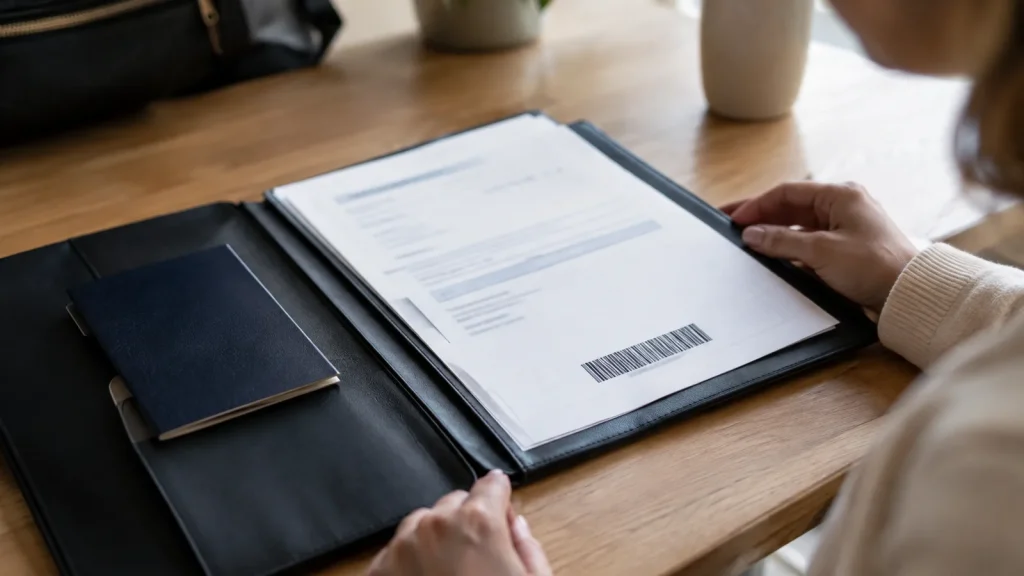
Right after you submit, a confirmation page with a barcode appears. Print it and bring it to your interview. You don't need to bring the whole form - the consul can see it in the system. If you didn't save it at the time, you can print it from CEAC anytime after submission.
For NVC cases, the next step is uploading civil and sponsor documents. Once every fee is paid, every form is submitted, and the documents are accepted, you get a letter that your case is documentarily complete, and the NVC puts it in line for an interview at the embassy. Family-based cases with an I-864 are covered in more detail on the family-based immigration to the US page and in the article on CR-1 and IR-1 spouse visas.
How to Unlock the DS-260 After Submission
There's no unlock button for the applicant. Only the NVC, the Kentucky Consular Center (KCC) for the lottery, or the embassy where you'll interview can reopen a submitted form (State Department's DS-260 FAQ). The process depends on your case type.
Family-based and employment-based visas, no interview scheduled yet. Submit a request through the NVC's Public Inquiry Form. Give your case number, the applicant's name, and what needs fixing. Once the NVC reopens the form, its CEAC status changes to Re-opened. Make your corrections, go through Sign and Submit again, and print a new confirmation page. A family member who came along after you submitted gets added through a separate button on the applicant list.
Green Card Lottery. The KCC only takes requests by email, at [email protected]. Include your name, date of birth, and case number exactly as they appear in your Entrant Status Check, plus what needs fixing. A subject line like "case number - UNLOCK REQUEST" isn't officially required, but it helps your email get noticed. If you got married or had a child after you registered for the lottery, the KCC adds them to your case.
Interview already scheduled. At that point, the NVC can no longer reopen your form. The consul asks at the interview whether you're ready to sign off on your answers, and if not, makes the correction on the spot (22 CFR 42.67). If the form is incomplete, the embassy staff reopens it and asks you to finish it and resubmit.
There's no official timeline for unlocking a form. For the NVC, the best guide is how fast the center is currently answering requests, shown on the NVC processing times page.
When to fix something ahead of time versus at the interview:
- ahead of time - a new marriage or divorce, a child born, a new passport, a past denial or violation you didn't disclose, a mistake in your name or date of birth;
- at the interview - a typo in a street name, a new title at the same job, a minor detail you can back up with a document.
If your passport changed or your information changed significantly after the interview - your case went into 221(g) administrative processing, for example - you'll need to submit the DS-260 again, but you won't have to take the oath in person a second time.
What Changed in 2025-2026
As of November 1, 2025, the NVC schedules immigrant visa interviews in the country where the applicant lives, and in the country of nationality on request. The post notifies you by letter, so your country of residence on the DS-260 needs to be accurate and current. For the lottery, the State Department says it plans to apply this rule in future program years.
From January 21, 2026, the State Department paused immigrant visa issuance for nationals of 75 countries. The pause ended August 21, 2026, following a court ruling, though the government is appealing. The parallel pause on Diversity Visa issuance ended August 28, 2026. A separate order, Presidential Proclamation 10998, restricted visa issuance for nationals of 39 countries starting January 1, 2026. You could still file the DS-260 during either pause - if either one might apply to you, check your status before the interview, since the ruling is being appealed.
The State Department hasn't added new questions to the DS-260 or a separate public-charge form in 2026. DV-2026 visas are issued only through September 30, 2026, with no exceptions.
Frequently Asked Questions About the DS-260
Getting ready for your immigrant visa interview? We'll review your DS-260 and your NVC document package
Leave a request and we will contact you shortly

How to Get an L-1 Visa in the US and an L-2 Visa for Your Family

How to Get an E-2 Visa in the USA - Who Qualifies and How to Apply
How to Get a CR1 or IR1 Visa for Your Spouse - Petition, Timeline and Cost