


UK Spouse and Partner Visa - Who Qualifies and How to Apply


The UK spouse visa (also called the partner visa) is a family visa under Appendix FM. It is for the husband, wife, civil partner, unmarried partner or fiancé(e) of a British citizen or a person with settled status in the UK. There are five requirements. The sponsor must have the right status, the couple must earn at least £29,000 a year, you need English, you need a place to live, and the relationship must be genuine. Below you will find what the Home Office checks for each one, what the application costs with the health surcharge (IHS), how long a decision takes and what changes on the way to permanent status. The figures were checked against gov.uk on November 4, 2026.
Check your income and documents before you apply
Leave a request and we will contact you shortly
Who can apply and who can be a sponsor
The applicant is the foreign partner. The sponsor is the partner who already lives in the UK. Both of you must be 18 or older. There is one visa, but it has four routes.
- Spouse - a marriage that is recognised in the UK.
- Civil partner - a civil partnership.
- Unmarried partner - you have lived together for at least 2 years by the date you apply. Or you have been a couple for 2 years, and work, study or cultural reasons kept you from living together.
- Fiancé(e) or proposed civil partner - you will marry in the UK within 6 months of arriving.
A sponsor can be (gov.uk, Apply as a partner or spouse):
- a British or Irish citizen;
- a person with settled status, such as indefinite leave to remain (ILR), settled status under the EU Settlement Scheme or permanent residence;
- a citizen of an EU country, Switzerland, Norway, Iceland or Liechtenstein with pre-settled status, if they lived in the UK before January 1, 2021;
- a person with a Turkish Businessperson or Turkish Worker visa;
- a person with refugee status or humanitarian protection.
If your partner is in the UK on a Skilled Worker or student visa, this route is not open to you. Their family comes as dependants, with different rules and different fees.
You must plan to live together in the UK permanently. This is not a formality. The Home Office asks how you met, how often you see each other and where you lived before. If you are not sure that your situation fits, you can go through it before you apply. There is more on the page about help with a UK partner visa.
The income requirement - at least £29,000 a year
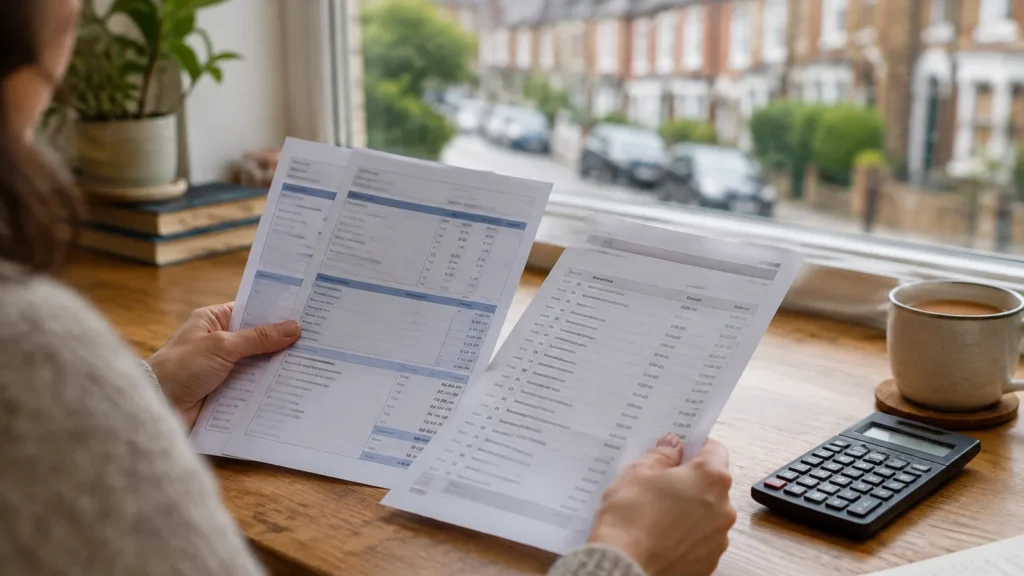
Since April 11, 2024, a couple must show a combined income of at least £29,000 a year before tax (gov.uk, Financial requirements). The amount is the same for the whole family. For new applications there is no extra amount for children. An older rule still applies to one group. If you first applied as a partner before April 11, 2024 and now extend with the same partner, the threshold is £18,600. It rises by £3,800 for the first child and £2,400 for each further child.
What counts as income:
- UK salary before tax, shown by 6 months of payslips, bank statements and a letter from the employer with your job title, type of contract and pay;
- self-employment or director income from a British company, shown by a Self Assessment tax return;
- a pension and other income that is not from work, such as rent or dividends;
- savings above £16,000.
The biggest trap for an applicant abroad is their own salary at home. gov.uk says that only income earned in the UK counts. So when you apply from another country, the income of the British partner is usually what counts, not yours.
Savings follow an Appendix FM formula - £16,000 plus 2.5 times the shortfall. With no income at all, you need £16,000 + 2.5 × £29,000 = £88,500. The money must sit in an account the couple controls for at least 6 months before you apply.
You do not need to meet the threshold if the British partner receives certain disability or carer benefits. These include Personal Independence Payment, Disability Living Allowance and Carer's Allowance, and about ten more on the gov.uk list. In that case the Home Office checks that the family can support itself and pay for housing without public funds (adequate maintenance).
If your income falls short, a refusal is not automatic. A visa can be granted in exceptional circumstances. One example is a British child living in the UK. Another is a refusal that would breach the right to family life. But then the road to ILR is 10 years instead of 5.
English language - A1 to enter, higher later
For the first visa you need a speaking and listening test at level A1 of the CEFR scale (gov.uk, Knowledge of English). It must be a Secure English Language Test (SELT) from a provider approved by the Home Office. Outside the UK these are PSI (Skills for English UKVI), IELTS SELT Consortium (IELTS Life Skills and IELTS for UKVI), LanguageCert and Pearson (PTE). The result must be no more than 2 years old on the day you apply.

The requirement rises along the way.
- At the extension after 2.5 years you need A2, if you took A1 to enter.
- For ILR after 5 years the level is B1 today.
- For ILR applications from March 26, 2027 the level is B2 (Appendix KoLL). This is already written into the rules.
You do not need a test if you are a citizen of a majority English-speaking country. The United States, Canada, Australia, New Zealand and Malta are on the gov.uk list, along with others. You are also exempt if you are over 65 or if a health condition stops you from taking the test. Instead of a test, you can show a bachelor's degree or higher that was taught in English. If the degree is not British, you need an Ecctis assessment.
If ILR is your goal, it makes sense to take B1 or higher straight away. You can use that result again while the certificate is valid and the test stays on the approved list.
Housing, the TB test and proof of your relationship
Housing. You must show where the family will live, with a tenancy agreement or ownership papers. The home must not be overcrowded and must meet health and safety standards.
TB test. A chest X-ray at a clinic approved by the Home Office is required if you lived for 6 months or more in a country on the list and you lived there in the last 6 months (gov.uk, TB test). The list includes, for example, India, Pakistan, Nigeria, the Philippines, Kazakhstan, Georgia and Moldova. The certificate is valid for 6 months from the date of the X-ray, so it is best to do it closer to your application.
Your relationship. The Home Office wants documents from a government body, a bank, a landlord, a utility company or a doctor. They must be no more than 4 years old.
- A marriage or civil partnership certificate.
- A tenancy agreement, bills or Council Tax for a shared address.
- A statement from a joint bank account.
- A letter from a doctor or dentist showing the same address.
If you live apart, you need proof of regular contact. This can be messages, calls, financial support and trips together. Documents that are not in English need a certified translation. You also need details of any earlier marriages for both of you, with the divorce papers.
Home Office fees and IHS - what the visa costs
Fees went up on April 8, 2026 (UK visa fees). You pay the Immigration Health Surcharge for the whole visa up front (gov.uk, IHS).
| What you pay | From abroad | Inside the UK |
|---|---|---|
| Partner visa fee | £2,064 | £1,407 |
| IHS, adult | £3,105 (2 years 9 months) | £2,587.50 (2.5 years) |
| IHS, child under 18 | £2,328 | £1,940 |
For one adult applying from abroad that comes to £5,169 in government payments alone. Each child on the application pays the same visa fee plus their own IHS. On top of that come the English test, the TB test and translations. If you apply inside the UK, you can pay an extra £1,000 for super priority and get a faster decision.
IHS gives you access to the NHS from the first day of the visa.
Planning a UK spouse visa? Let us work out the fees and check your income before you pay
Leave a request and we will contact you shortly
How to apply and how long it takes
You apply online on gov.uk. You apply separately from abroad or from inside the UK. After you pay the visa fee and IHS, you book an appointment at a visa application centre. There you give your fingerprints and a photo and upload your documents. If your country has no centre, you can choose one in a neighbouring country.

Standard Home Office processing times (visa processing times):
- from abroad - 12 weeks;
- inside the UK - 8 weeks, if your income and English are confirmed;
- inside the UK without the income and English evidence (an exceptional circumstances case) - about 12 months.
After approval you get an eVisa. This is an electronic status in your UKVI account, and there is no paper card any more. On a partner visa you can work and study. You cannot claim most benefits (no recourse to public funds).
Switching inside the UK. You can switch if you are in the UK on another long-term visa. If you hold a visitor visa, or any visa of 6 months or less, you usually have to leave and apply from abroad. The fiancé(e) visa is the exception. This is why a trip to your partner on a visit visa does not work if the plan is to apply once you are there.
The fiancé(e) visa and marrying in the UK
You need a fiancé(e) visa if you want to marry in the UK and stay. It is granted for 6 months, and you cannot work or study on it. The requirements are the same - income, A1 English and housing. You must also show that any earlier marriages of both of you have ended. You need a TB test even for this short visa.
After the wedding you apply to extend as a spouse. You do this inside the UK, without leaving. The time on a fiancé(e) visa does not count towards the 5 years to ILR.
If you only want to marry in the UK and leave, there is the Marriage Visitor visa. It does not work for a move. Often it is simpler to marry in your own country and apply for a spouse visa straight away. That means fewer steps and one set of fees instead of two.
Extension and the road to ILR - what earned settlement changes
The first visa from abroad is granted for 2 years 9 months. An extension inside the UK is for 2.5 years (gov.uk, How long you can stay). You can extend more than once. At each extension the Home Office checks your income and relationship again, and English at level A2.
Today you can get ILR after 5 years on a partner visa. You need B1 (B2 from March 26, 2027) and the Life in the UK test.
On November 2, 2026, the government published the final outcome of the earned settlement consultation (gov.uk, Earned settlement). The basic wait for ILR will become 10 years. Partners of British citizens keep the 5-year route. Partners of people with ILR, and other sponsors who are not British citizens, will wait longer, according to the Home Office estimate. For everyone, English at B2, the Life in the UK test, no criminal record and no debts to the state will be required.
This is policy for now, not rules. There is no start date. The Home Office says it will publish the technical rules first. Until then the current Immigration Rules apply, so check them on the date you apply for ILR.
Applying from the US and other countries
You apply from the country where you live legally. Visa application centres are run by VFS Global in many countries. You can find the addresses on the gov.uk page Find a visa application centre. If you have already moved to a third country and live there legally, you apply there.
US citizens do not need the English test, because the US is a majority English-speaking country. The US is not on the TB test list. But you still need a TB test if you lived for 6 months or more in a listed country and you lived there in the last 6 months. Documents that are not in English need a certified translation. If your partner is an EU citizen with pre-settled or settled status, check the EU Settlement Scheme first. It is free for families that were formed before December 31, 2020.
For a move from the US in general, read how to move to the UK from the US. All UK visas are on the UK visas page.
Frequently asked questions about the UK spouse visa
Planning a UK spouse visa? We will check the requirements and help you prepare the documents
Leave a request and we will contact you shortly

How to Move to the UK from the US - Visa Routes for Americans
A US passport gets you into the UK as a visitor, and to live there you need a visa with a clear purpose. For Americans, the realistic routes are a sponsored job, a talent or graduate visa that needs no employer, study, a British partner or an innovative business. Below is what each route requires, […]