


How Spousal Sponsorship Works in Canada - Inland or Outland, Documents and Timeline


Spousal sponsorship is the route to permanent residence (PR) for the husband, wife, common-law partner or conjugal partner of a Canadian citizen or PR. There are two applications, one for sponsorship and one for PR, and you file them together online. Below you will find who can sponsor, how inland differs from outland, what relationship evidence you need, what IRCC charges and where to check processing times. The rules and fees were checked against canada.ca on November 9, 2026.
Not sure whether to go inland or outland? We will look at your case on a consultation
Leave a request and we will contact you shortly
Who can sponsor a spouse or partner
The sponsor must be a Canadian citizen, a permanent resident or a person registered under the Indian Act. They must be 18 or older and live in Canada (IRCC, who can sponsor). A citizen who lives abroad can apply if they show they will return to Canada by the time the partner becomes a PR. A permanent resident who lives abroad cannot sponsor.
For most spousal applications there is no minimum income. A threshold appears only when the sponsored child (yours or your partner's) has children of their own. The amount is worked out on form IMM 1283.
You cannot sponsor a spouse if any of these apply.
- You were sponsored by a spouse or partner and became a PR less than 5 years ago.
- You signed an undertaking for a previous spouse and 3 years have not passed since that person became a PR.
- You have already applied to sponsor the same person and there is no decision yet.
There are also general bars. A sponsor does not qualify if they receive social assistance for a reason other than disability, are in prison, owe court-ordered support or an immigration loan, defaulted on an earlier sponsorship undertaking, have an undischarged bankruptcy, were convicted of a violent or sexual offence or an offence against a relative, or are under a removal order.
The sponsor signs an undertaking to support the spouse for 3 years from the day the spouse becomes a PR (IRCC, sponsor's undertaking). For a child under 22 it is 10 years, or until the child turns 25, whichever comes first. You cannot shorten or cancel the undertaking, even if the relationship ends. If the spouse receives social assistance during that period, the sponsor has to repay it.
Who you can sponsor - spouse, common-law and conjugal partner
IRCC recognises three types of relationship (IRCC, who you can sponsor). In every case the partner must be at least 18.
- Spouse - a legal marriage. It must be valid both in the country where it took place and in Canada. Proxy, telephone and online marriages, or marriages where one spouse was not physically present, are not recognised.
- Common-law partner - you are not married, but you have lived together for at least 12 months in a row. Short separations for work or family reasons are allowed.
- Conjugal partner - the relationship has lasted at least a year, the partner lives outside Canada, and you could not live together or marry for reasons beyond your control.
You add children to the same application. A child is a dependant if they are under 22 and have no spouse or partner. A child over 22 qualifies only if they have depended on their parents financially since before 22 because of a physical or mental condition.
You must declare every family member, including those who will not move. A child you do not declare now cannot be sponsored later.
Inland vs outland - what is the difference
You apply in one of two classes. Inland is the Spouse or Common-law Partner in Canada class. Outland is the Family Class (IRCC, complete guide IMM 5289).
| Inland | Outland | |
|---|---|---|
| Where the partner lives | in Canada, with the sponsor | outside Canada |
| Who you can sponsor | spouse and common-law partner | spouse, common-law and conjugal partner |
| Status in Canada | valid temporary status or a suitable public policy | not needed |
| Work while waiting | open work permit after the AOR letter | if the partner lives in Canada with the sponsor, the same open work permit |
| Travel abroad | risky, the partner may be refused re-entry | the partner already lives abroad |
| If refused | no appeal to the IAD, the partner leaves when temporary status ends | the sponsor can appeal to the IAD within 30 days |
The main difference is a refusal. In outland the sponsor can appeal to the Immigration Appeal Division (IRB, sponsorship appeals). The deadline is 30 days from the day the partner received the refusal letter. There is no appeal if the partner was found inadmissible, for example for serious criminality or a security threat. If the refusal is for misrepresentation, an appeal about a spouse can still be heard. Inland has no such right.
Inland suits a couple who already live in Canada where the partner wants to work. An open work permit goes to a spouse or partner who lives in Canada with the sponsor, is in a genuine relationship and has received the AOR letter confirming the PR application (IRCC, open work permit for a sponsored spouse). Without an AOR you can apply only if the current status ends in 2 weeks or less. If the PR application is still in process, the permit can be extended for 2 more years. More on open work permits in Canada.
Inland does not let you travel without risk. IRCC warns that if the partner leaves Canada before getting PR, they may not be allowed back in. If trips are unavoidable, that is a reason to think about outland first.
Relationship evidence - what to show
The officer checks that the relationship is genuine and was not formed for immigration. The main form is the relationship questionnaire, Sponsorship Evaluation and Relationship Questionnaire (IMM 5532). You attach documents that show the history of the couple.

A strong package usually includes the following.
- A marriage certificate or, for common-law, the Statutory Declaration of Common-law Union (IMM 5409).
- A shared address - a lease, property papers, bills in both names.
- Shared finances - a joint account, transfers to each other, insurance that names the partner as beneficiary.
- Photos from different years, tickets and stamps from trips together.
- Messages and call records, if you lived apart.
- Birth certificates of children you have together.
For common-law, IRCC looks for a couple who share a home, support each other financially and emotionally, and present themselves as a couple in public. For a conjugal partner you also have to explain what exactly kept you from living together or marrying.
A package looks weak when the documents cover only one moment and not the whole relationship. A pile of wedding photos and nothing from before the wedding raises questions. It is better to show how the relationship grew - meeting, trips, moving in, daily life.
Spousal sponsorship checklist and how to apply
The principal applicant, that is the sponsored partner, files both applications online through the PR Portal (IRCC, how to apply). The applicant signs by typing their own name. After a few questions the portal builds the document package and a checklist for your country.
You will need the following.
- The sponsor and applicant forms from the package, including the relationship questionnaire IMM 5532.
- Passports, marriage certificates and birth certificates of children.
- Police certificates from every country where the sponsored partner lived for 6 months in a row or longer after turning 18.
- Photos for the future PR card.
- English or French translations of every document in another language, and for a translator who is not certified, an affidavit.
- Proof that the fees were paid.
You do not have to do the medical exam in advance. IRCC sends a request at a certain stage, and you then have 30 days to do it with a doctor from the IRCC list.
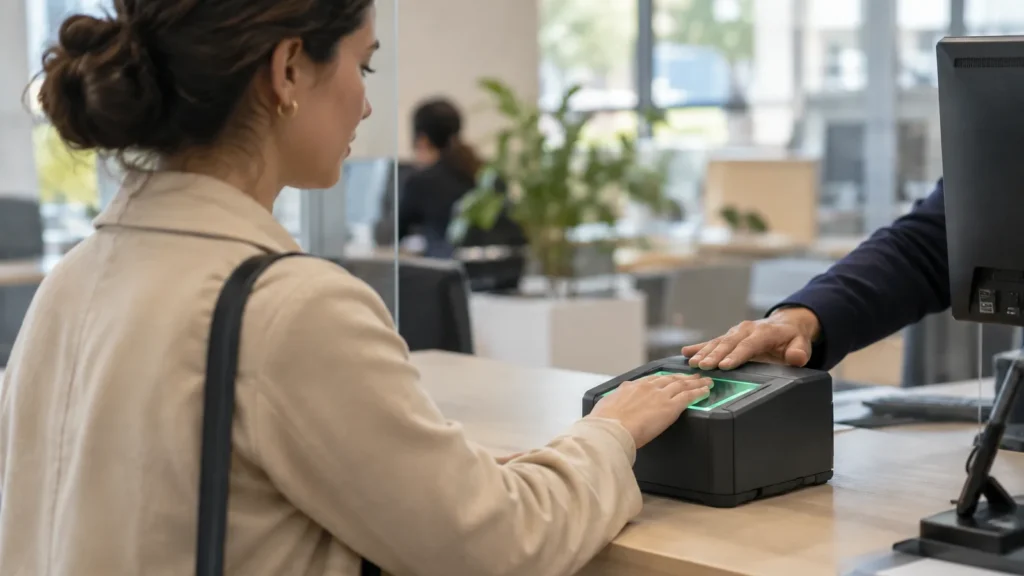
The sponsored partner gives biometrics, and the fee is paid when you apply. The sponsor does not need to give them, because Canadian citizens and PRs are exempt.
An incomplete application is not processed. It is returned, and you have to file again. If you work with a representative, a paid one must be authorised to do this work, and for any representative the application includes form IMM 5476.
IRCC fees and spousal sponsorship processing time
These are the fees as of November 9, 2026 (IRCC, fee list).
| What you pay | Amount |
|---|---|
| Spouse or partner - sponsorship, processing and the right of permanent residence fee (RPRF) | CAD 1,260 |
| The same without the RPRF | CAD 660 |
| Each dependent child | CAD 180 |
| Biometrics, one person | CAD 85 |
| Biometrics, a family of 2 or more | CAD 170 |
The right of permanent residence fee (RPRF, CAD 600) can be paid later, but before you receive PR. If the application is withdrawn or refused, the RPRF is refunded. The medical exam, police certificates and translations are paid separately.
Want the package checked before you pay the fees? We will review your documents and relationship evidence
Leave a request and we will contact you shortly
IRCC publishes processing times in its processing times tool. It has two lines, one for a partner in Canada and one for a partner outside Canada, and a separate one for people who will live in Quebec. The numbers change, so check them for the date of your application.
Quebec - a separate undertaking
If the sponsor lives in Quebec, the process has two steps. First IRCC checks whether the sponsor is eligible. Then the sponsor signs a separate undertaking with the Quebec government, and only after the IRCC letter, because Quebec will not take the application earlier. Quebec can require income, and it has its own undertaking period and its own processing times. Check the province's rules on the website of Quebec's immigration ministry before you apply.
Sponsoring an American spouse or applying from the US
US citizens need neither a visa nor an eTA to visit Canada (IRCC, entry requirements by country). If an American partner already lives with the Canadian sponsor in Canada and has valid temporary status, the couple can use inland and the partner can apply for the open work permit after the AOR. If the couple lives in the US, outland is the usual route. The citizen sponsor must then show plans to live in Canada.
You need police certificates from the US and from every country where you lived for 6 months or more after turning 18. The procedure is on the IRCC page about police certificates from the United States. If you have moved on to a third country, you need a certificate from there too. Documents in other languages are translated into English or French.
For other ways to settle, such as work, study or Express Entry, read how to move to Canada from the US. If you want help with the application, see help with spousal sponsorship or other family sponsorship options. Once you have PR, you may need PR card renewal later.
Frequently asked questions about spousal sponsorship in Canada
Preparing a spousal sponsorship? We will prepare the application and the relationship evidence
Leave a request and we will contact you shortly

Skilled Military Recruits - a new Express Entry category for foreign military personnel in 2026

How to Move to Canada from the US - Real Options for Americans
Americans can visit Canada with just a passport, but living and working there takes a permit or permanent residence. The routes that actually work for US citizens and green card holders are Express Entry, provincial nominee programs, CUSMA work permits, study and family sponsorship. Below are the requirements, fees and timelines for each, how to […]